How to sell AI help as diagnosis, setup, and daily operations
The easiest AI agent offer to describe is "we automate your work." The easier offer to buy is different: diagnose the right workflow, install the first safe agent, and operate it every month with logs, evals, permissions, and improvements.
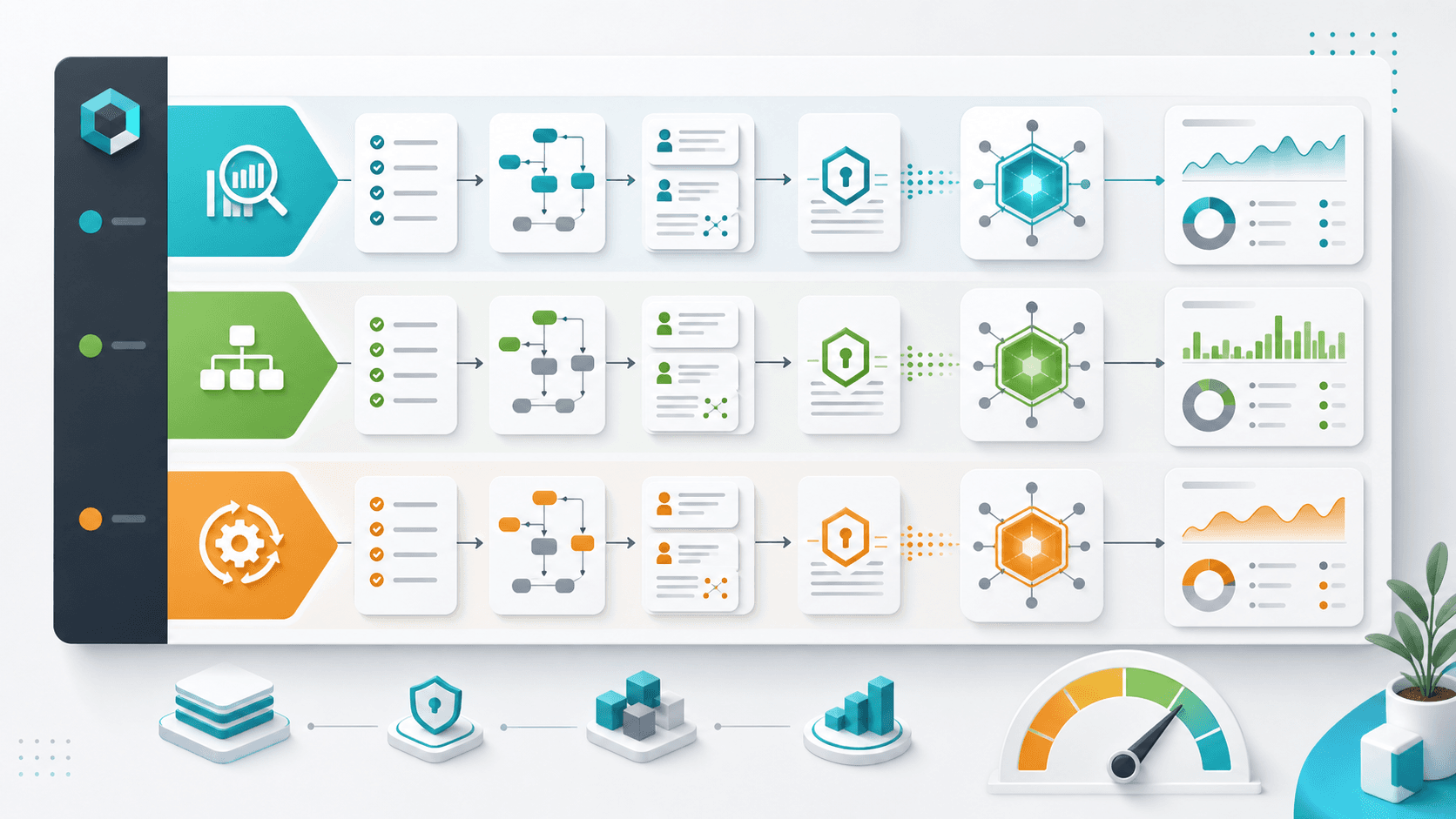
AI agent monetization guide
Most AI automation offers fail because they sell the most exciting part and hide the part customers actually worry about. The exciting part is the agent. The buying part is diagnosis, setup, permissions, knowledge cleanup, failure handling, reporting, and monthly improvement. Customers do not wake up wanting an agent. They want fewer repeated tasks, fewer missed handoffs, faster answers, safer approvals, and proof that the system keeps working after the demo.
1. Overview: customers buy reduced friction, not automation
The phrase "AI automation agency" sounds obvious from the builder side. From the buyer side, it is vague. A small business owner, hotel host, ecommerce operator, or B2B sales team is not buying a model, prompt, or agent framework. They are buying fewer repeated questions, fewer manual copy-paste steps, fewer missed follow-ups, and more predictable operations.
That is why the first sellable unit should not be "we build AI agents." It should be a service package. First, diagnose whether the workflow is worth automating. Second, set up one narrow agent or workflow with sources, tools, approvals, and a rollback path. Third, operate it monthly: watch logs, update knowledge, tune prompts, run evals, and report whether the work improved.
This also matches the direction of the field. Anthropic recommends starting with the simplest workable agentic system and adding complexity only when it pays for itself. MCP makes tool connection easier, but its own tool guidance still emphasizes human confirmation and visibility for sensitive actions. Zendesk and AWS are packaging AI agents around outcomes, operations, observability, evaluation, and managed infrastructure. The money is moving toward responsibility, not just clever prompts.
2. Small dictionary: what you are really selling
Diagnosis means the pre-install inspection. Before touching tools, you map the repeated work, request volume, current cost, data sources, failure risk, and approval boundary. In plain language, it is the site survey before installing the machine.
Setup means installing the first controlled workflow. That includes the workflow card, source-of-truth folder, SOP, MCP/tool connections, prompts, permissions, handoff rules, test cases, and a first report. SOP means standard operating procedure: the written recipe for how a job should be done.
Managed operations means the monthly maintenance contract. Retainer means the recurring fee for that maintenance. Eval means a recurring test set that checks whether the agent still behaves correctly. KPI means the business signal you are tracking, such as response time, handoff count, saved hours, lead quality, or resolution rate. SLA means the service promise: how often you check, how quickly you respond, and what counts as an incident.
- Diagnosis: choose the right workflow and prove the problem is worth solving.
- Setup: install one narrow workflow with sources, tools, approvals, and tests.
- Managed operations: keep the agent working through logs, evals, knowledge updates, and incident handling.
- MCP: a standard connector that lets AI tools talk to files, APIs, databases, and business systems.
- Approval boundary: the line where AI must stop and ask a human.
- Retainer: a monthly fee for ongoing operation and improvement.
3. Why selling only "automation" is weak
Automation is a feature word. It does not answer the buyer's real questions: Which job should we automate first? What if the answer is wrong? What company knowledge will the agent read? Who approves customer-facing messages? What happens when a login expires? How do we know it saved money? Who fixes it next month?
Those questions are not objections to AI. They are the product. If your offer does not include them, the customer has to carry the hidden work. That makes the offer feel risky even when the demo looks impressive.
The X inbox showed the same practical pattern. Builders are talking about company operating systems in Markdown, MCP-connected tools, skills, safeguards, managed agent platforms, issue queues, runtime binding, and human review. The signal is clear: the commercial opportunity is not only to make an agent. It is to make the agent legible, bounded, testable, and maintainable.
4. Package 1: AI Automation Fit Check
The first paid or low-friction offer should be a diagnosis. It can be small, but it must feel concrete. The output is not a sales call summary. It is a workflow map: what repeats, how often it happens, who owns it, which data sources matter, what can go wrong, and what "done" looks like.
A good diagnosis also says no. Some work should not be automated yet because the source data is messy, the risk is too high, the volume is too low, or the current process is not stable. This honesty makes the offer stronger. Customers trust a diagnostic service that protects them from the wrong AI project.
The final deliverable should include a ranked shortlist: one workflow to start, one workflow to postpone, one workflow to keep human, estimated time saved, setup complexity, monthly operation needs, and a simple before/after KPI.
- Map repeated requests, current tools, owners, volume, and failure points.
- Find the source-of-truth documents, SOP gaps, and missing examples.
- Mark read-only, approval-required, and forbidden actions.
- Choose one first workflow with a measurable KPI and a small eval set.
5. Package 2: setup the first safe workflow
The setup package turns the diagnosis into one working system. It should be narrow enough to verify in a week or two. Examples: guest question triage for a stay host, ecommerce refund/reply drafting, outbound lead research, internal SOP lookup, invoice check routing, or customer feedback clustering.
The setup is not only prompts. It includes the workflow card, source pack, tool connectors, permission table, prompt or skill files, example inputs, expected outputs, eval cases, and a human review queue. MCP is useful here because it gives a standard way for an AI application to reach tools and data, but the value comes from choosing which tools are allowed and what needs confirmation.
The buyer should receive a handover packet: what the agent does, what it does not do, where it reads from, where logs are stored, which actions require approval, how to run a healthcheck, and what to do when it fails. This turns setup from a one-off build into an operational asset.
6. Package 3: monthly managed operations
This is where many AI service businesses miss the margin. They charge for setup, then absorb support for free. But agents are living systems. Company knowledge changes. Customer questions shift. Tool permissions break. API behavior changes. A prompt that worked last month can drift when the source data changes.
Monthly operations should therefore be a real product. Review logs. Add new examples. Update SOPs. Run evals. Check failed cases. Improve the approval rule. Summarize saved time and unresolved risk. If an incident happens, write a short failure packet: signal, cause, fix, prevention rule, and proof that the issue is closed.
This is also how the seller compounds knowledge. Every monthly cycle creates better templates, better evaluation cases, better playbooks, and clearer packaging for the next client. The service becomes more valuable because the operator learns what breaks in the real world.
- Weekly or monthly healthcheck of gateway, tools, source access, and logs.
- Eval run against recurring examples and risky edge cases.
- Knowledge refresh for SOPs, pricing rules, policy changes, and examples.
- Incident/failure packet for repeated mistakes.
- KPI report showing saved hours, response speed, quality score, or handoff reduction.
7. Pricing logic: setup fee plus retainer, with careful outcome pricing
The cleanest first model is simple: diagnosis fee, setup fee, and monthly operations retainer. The diagnosis reduces risk. The setup installs value. The retainer keeps the system alive and improves it.
Outcome-based pricing can be powerful, but only when the metric is clear and attributable. Zendesk's AI agent positioning shows the market moving toward value and resolution-based language, but a small service provider should be cautious. If you cannot prove which resolution came from the agent, do not make the whole contract depend on it.
A practical offer can be structured as three tiers: Fit Check for workflow selection, First Workflow Setup for installation, and Managed Operations for ongoing improvement. Add outcome bonuses only for metrics both sides can audit, such as qualified lead packets, reduced support backlog, or verified saved hours.
8. What Guildex can sell first
Guildex already has a natural wedge: automation diagnosis for teams and operators with repeated work, cost pressure, and controllable data. That is exactly the buyer who benefits from a package rather than a vague AI promise.
Good first offers include stay-host guest help, ecommerce support triage, B2B outbound research packets, internal SOP lookup, and launch-ops reporting. Each one has repeated inputs, visible time cost, sources that can be cleaned, and an approval boundary that can be explained to a non-technical buyer.
The best sales page should therefore lead with the diagnosis. "We find the first workflow worth automating, install it safely, and operate it with monthly evidence" is clearer than "we build AI agents." It tells the buyer what happens before, during, and after the demo.
9. Why humans must grow with AI
As AI gets better, the human role does not disappear. It moves upward. The valuable person is no longer only the person who types the answer. It is the person who defines the work, chooses sources, sets permission boundaries, reads failure signals, judges quality, and turns repeated fixes into a better operating system.
That is why the service package matters. It trains both sides. The customer learns what AI can safely handle. The operator learns how to design workflows, manage risk, and measure improvement. The agent handles more work over time, but the human becomes better at designing the work itself.
The real product is not a magical autonomous worker. It is a disciplined loop: diagnose the right job, install a narrow system, operate it with evidence, learn from failures, and expand only when the first loop is stable.
참고자료
- Anthropic: Building effective agents
- Anthropic: Effective context engineering for AI agents
- Model Context Protocol: What is MCP?
- Model Context Protocol specification: Tools
- OpenAI API docs: Agents SDK
- OpenAI Codex docs: Agent approvals and security
- OpenAI Codex docs: Permissions
- NIST AI Risk Management Framework
- AWS: Amazon Bedrock AgentCore
- Zendesk: AI agents
- X: service-as-a-software, company OS, MCP, skills, and safeguards signal
- X: B2B open-source infrastructure packaging and operating-cost signal
- X: agent harness needs tools, memory, permissions, coordination, and observability signal
- X: managed agents platform, runtime, skill reuse, and review-queue signal
- X: narrow company-fit expert solutions over maximal model use signal
Package your first AI agent service around diagnosis
Guildex Fit Check helps teams identify the first workflow worth automating, define the source pack and permission boundary, install a controlled first agent workflow, and turn the result into a monthly operating loop.